SWEEP → IFVG → FVG
A shared confluence framework for MGC/GC and NQ/MNQ futures.
SWEEP
Price runs to an obvious liquidity level — a swing high/low where stop-losses are stacked — and takes it out.
Find the real level: plot the line chart (body closes only) to spot clean swing peaks, then switch back to candles and drag the level to the highest/lowest wick touching that peak. That wick, not the body, is the real stop cluster.
IFVG (Inversion FVG)
Almost immediately after the sweep, an existing Fair Value Gap gets tapped and the candle body (not the wick) closes all the way through it.
That close proves whoever was defending that zone lost control — confirmation the sweep was real, not a fakeout.
FVG
A fresh Fair Value Gap forms in the new true direction.
This box is the sniper entry zone.
Real Chart Examples
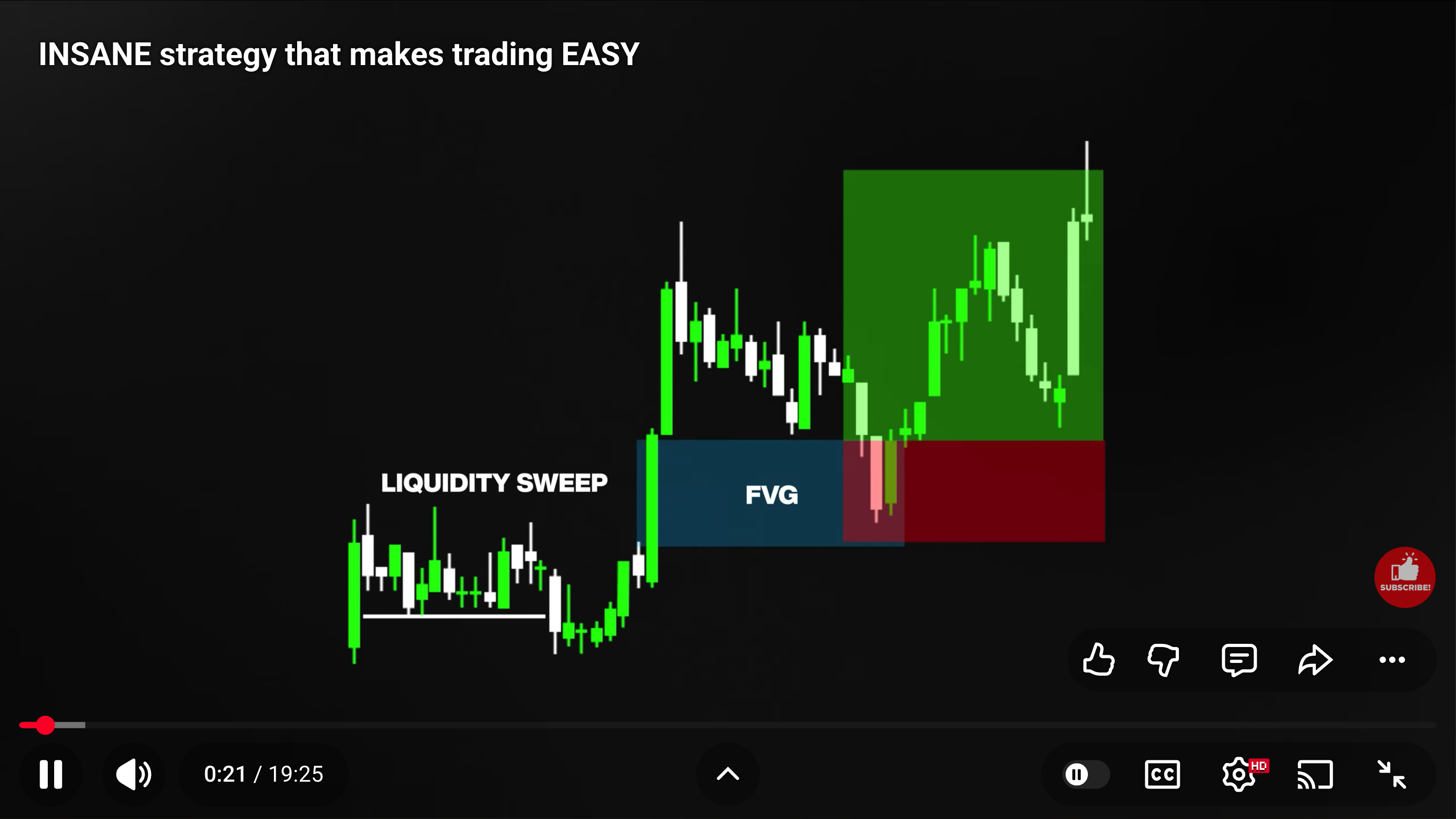
Source diagram
The base pattern straight from TP Carlos's video — liquidity sweep marked at the swing low, FVG box drawn over the reversal, price running up through it.
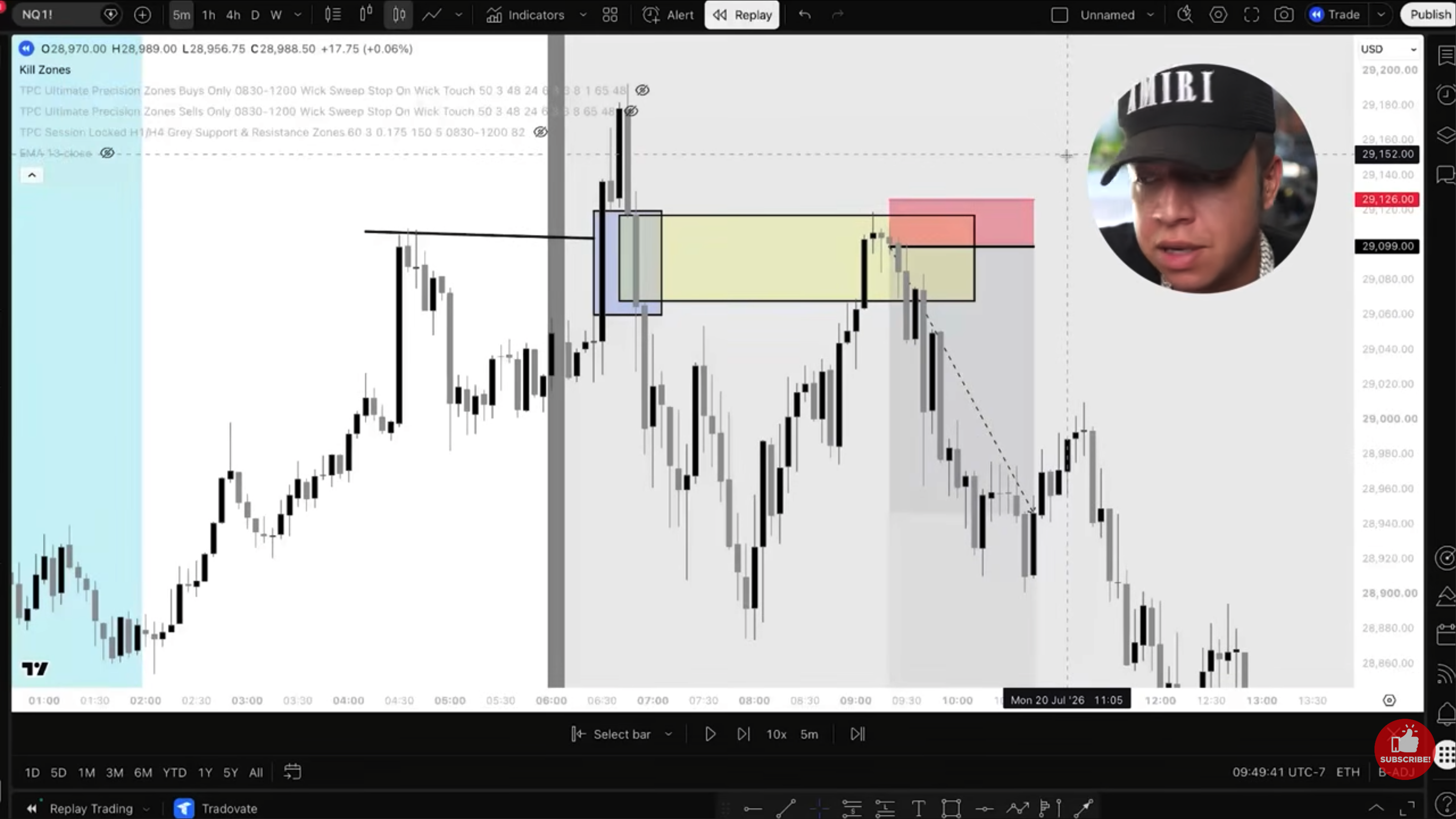
NQ 5m — zones marked
Same three zones (sweep / IFVG / FVG) drawn live on an NQ 5-minute chart in TradingView replay mode, ahead of the drop that follows.
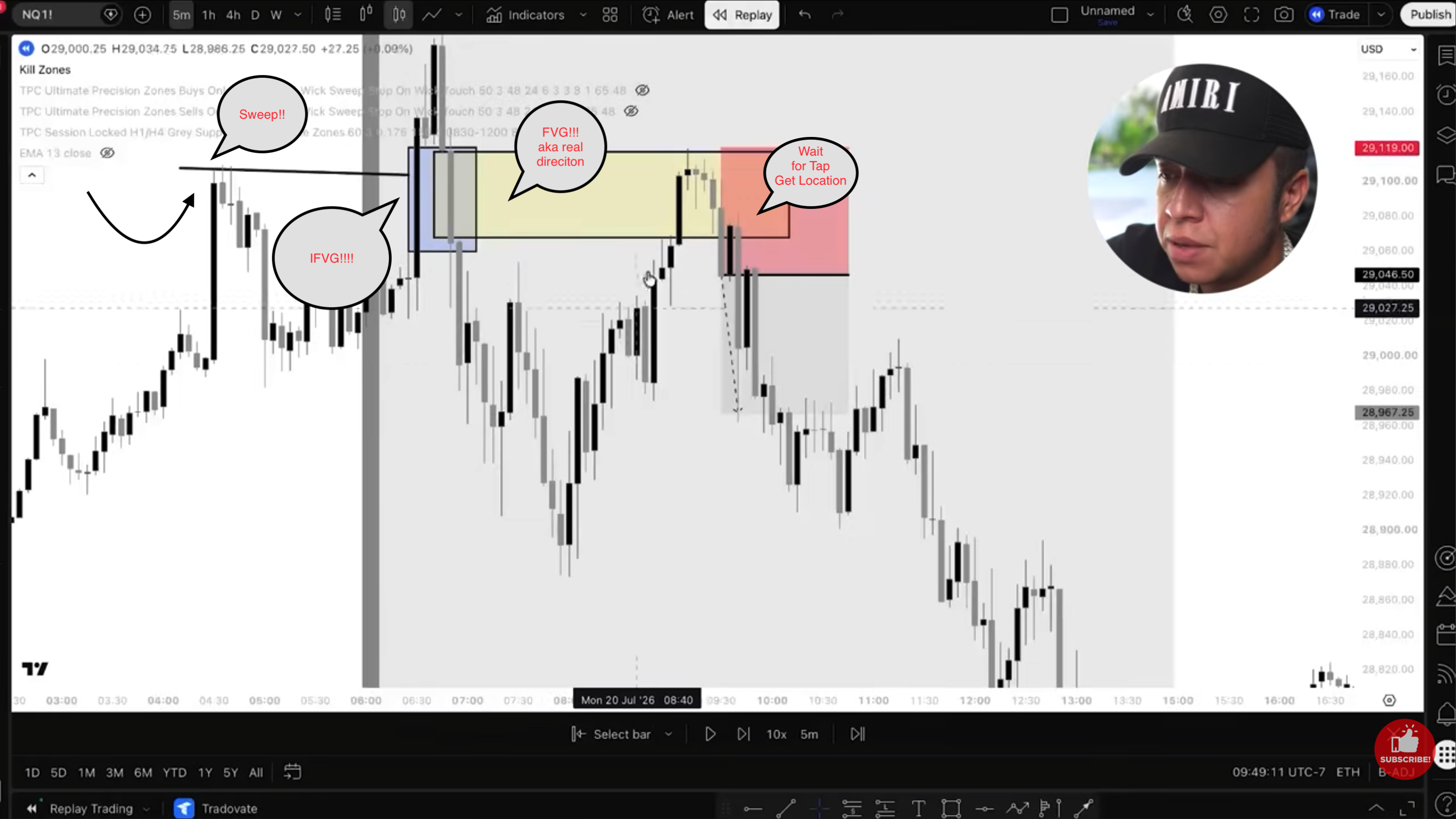
NQ 5m — trade walkthrough
Same setup talked through step by step, closed out at +89.00 PnL, R:R 1.47 — a real example of the sequence playing out and getting taken.
Worked Examples
Original illustrative sketches — one short, one long — walking the same three zones step by step.
Sweep of Highs → Short
BearishUptrend sweeps the prior swing high on a wick, an old bullish FVG gets tapped and closed through (IFVG), then a fresh bearish FVG box forms — short on a rejection back into it, stop above the sweep wick, target 3x the risk.
Illustrative sketch built to the framework's rules — not a live trade screenshot.
Sweep of Lows → Long
BullishDowntrend sweeps the prior swing low on a wick, an old bearish FVG gets tapped and closed through (IFVG), then a fresh bullish FVG box forms — long on a rejection back into it, stop below the sweep wick, target 3x the risk.
Illustrative sketch built to the framework's rules — not a live trade screenshot.
Glossary
Fair Value Gap (FVG)
3+ same-colored candles pushing one direction (a supply or demand push). Take candle 1 and candle 3, skip the middle candle. The leftover space between them is the gap/box — price is expected to eventually tap back into it.
Bearish FVG
Bottom wick of candle 1 to top wick/body of candle 3.
Bullish FVG
Top wick of candle 1 to bottom wick/body of candle 3.
Entry / Stop / Target
Entry
- Never enter on the first touch of the new FVG box.
- Aggressive entry: a strong rejection/push candle off the box.
- Safer entry: wait for a confirmed engulfing candle closing back out of the box.
- Works in any session — NY, Asia, London.
Stop / Target
- Stop-loss sits a few ticks beyond the FVG box — above it for shorts, below it for longs.
- Minimum target: 1:3 R, taken mechanically even if price keeps running.
- Multiple-FVG rule: if more than one FVG stacks in the same move, only take the 1st or 2nd. Skip the 3rd — it fails more often than it works.
⚠ Open Items / Caveats
- No sample size yet as of Aug 9 2026 — this needs forward-tested screenshots on both MGC and NQ before it's a live rule.
- Still needs a decision on whether it replaces or runs alongside each instrument's existing confirmation-candle rule.
- Qualifying setups should get logged and tagged "Sweep-IFVG-FVG" before it graduates out of Research Lab.